
 | This learning module is part 1 of Hidden in Plain Sight: Understanding and Combating Familial Trafficking. |
What is Familial Trafficking?
Familial trafficking refers to the exploitation and trafficking of individuals by their own family members for various purposes. This form of human trafficking is especially insidious as it involves betrayal and exploitation by those who are supposed to provide love and protection.
 Victims* of familial trafficking often suffer in silence due to feelings of shame, fear, and loyalty to their traffickers. It is crucial for communities and law enforcement agencies to be aware of the signs of familial trafficking and provide support and resources to victims to break free from this cycle of abuse.
Forms of Familial Trafficking
- Child Labor Exploitation - Forced to work long hours in work or hazardous conditions, often without proper compensation or education.
- Domestic Servitude - Exploited for their labor within their own homes. They may also experience physical, emotional, or sexual abuse at the hands of their trafficker.
- Commercial Sexual Exploitation - This can involve engaging in commercial sex acts, or other forms of sexual exploitation in exchange for money, shelter, food, or other basic needs.
- Forced Marriages - Coerced into marrying against their will for the benefit of their family, often to settle debts or secure social status.
How Prevalent is Familial Trafficking?
- 30% of identified trafficking victims were trafficked by a family member between the years 2012 and 2016 according to one study by the United Nations Office on Drugs and Crime (UNODC).
- 50% of trafficking victims, globally, were trafficked by family members according to one study conducted by the International Labour Organization (ILO).
Barriers to Reporting/Prevalence of Data
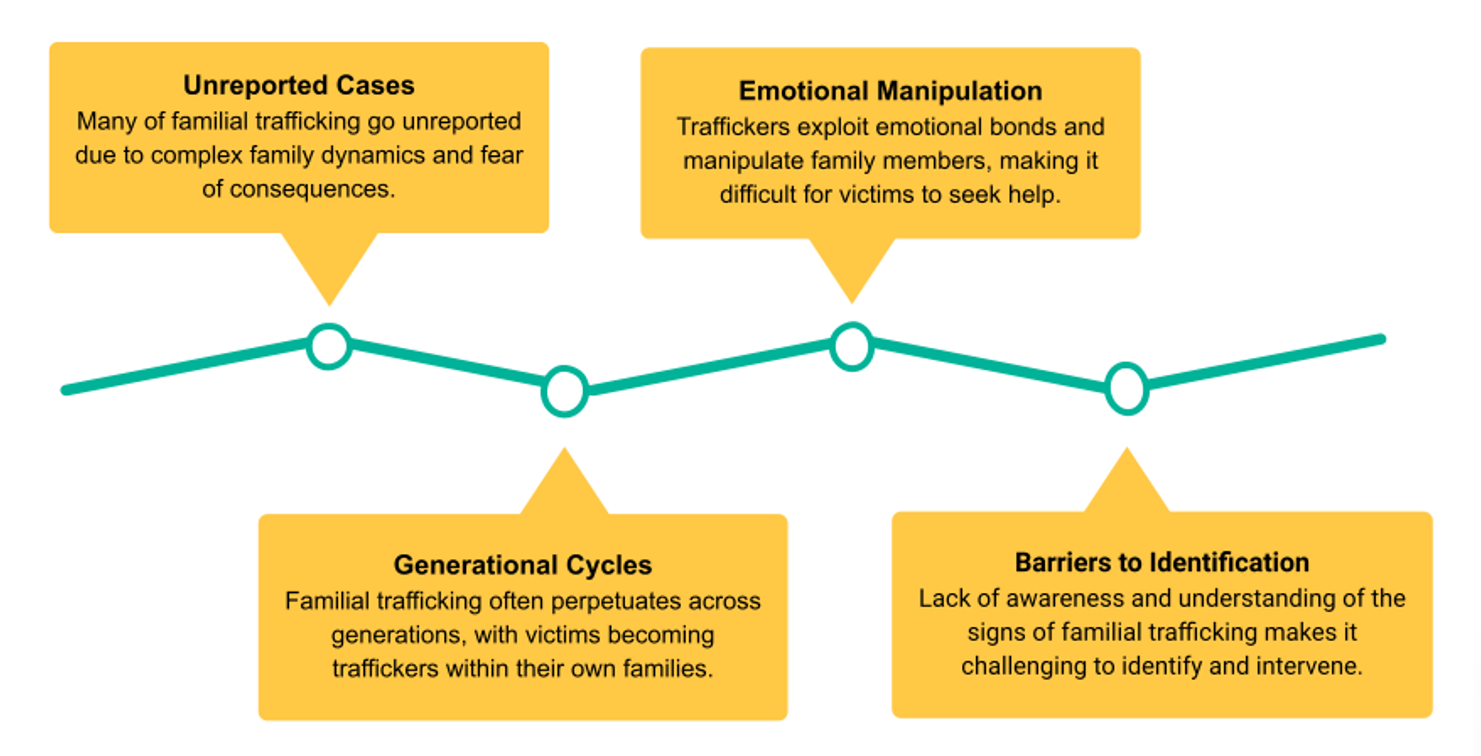
Factors that Contribute to Familial Trafficking
- Poverty
- Lack of education and awareness
- Mental health challenges and generational trauma
- Social and cultural norms
- Violence and abuse within the family (e.g. generational trafficking)
- Family dynamics and relationships
- Lack of legal protections and enforcement
- Lack of prevention measures
- Lack of access to opportunities and support
The Hidden Realities of Familial Trafficking
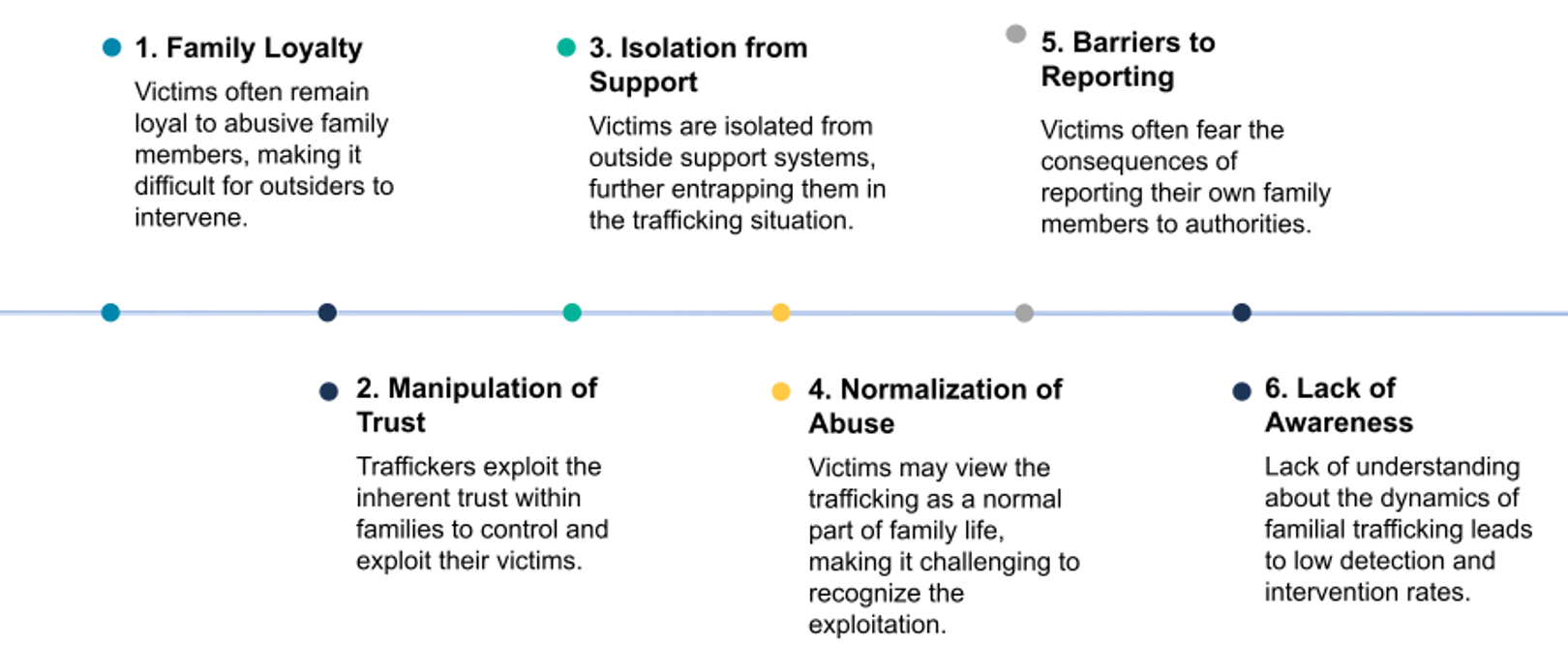
Familial trafficking is particularly insidious because it is hidden in plain sight.
Victims often stay loyal to their abusive family members, making external intervention challenging. Traffickers exploit inherent trust within families to manipulate and control victims. Isolation from external support systems and normalization of abuse within the family context obscure the exploitation, making it harder for victims to recognize their plight. Fear of repercussions keeps victims from reporting their family members to authorities, and a widespread lack of awareness about the dynamics of familial trafficking leads to low detection and intervention rates. These factors collectively contribute to why this form of trafficking remains hidden and difficult to combat.
Module Navigation
- What is Familial Trafficking? (Current Module)
- Signs and Indicators of Familial Trafficking
- Standing in Solidarity: Strategies for Combating Familial Trafficking
*Throughout this toolkit, language has been chosen intentionally to reflect firsthand experience. “Survivor” is most often used, but in some instances “victim” is used when referencing individuals still experiencing trafficking, as a term used in research, and to reflect that the “journey from victim to survivor is unique to each person.”